February 13, 2026
The $10,000 Hour: Calculating the Real Cost of a "Frozen" Shop Floor
Author
Look, if you think your biggest IT cost is that monthly invoice from your "computer guy," I've got bad news for you.
Most business owners (and I mean smart people who run successful operations) treat IT like just another line item. You know, like the power bill. Or whoever empties the trash cans on Friday nights. But here in East Tennessee, where we're talking manufacturing and professional services? That mindset will absolutely kill you.
Because here's the thing nobody wants to admit: your biggest IT cost isn't what you pay to keep things running. It's what you lose when they stop.
The "Frozen Floor" Nightmare
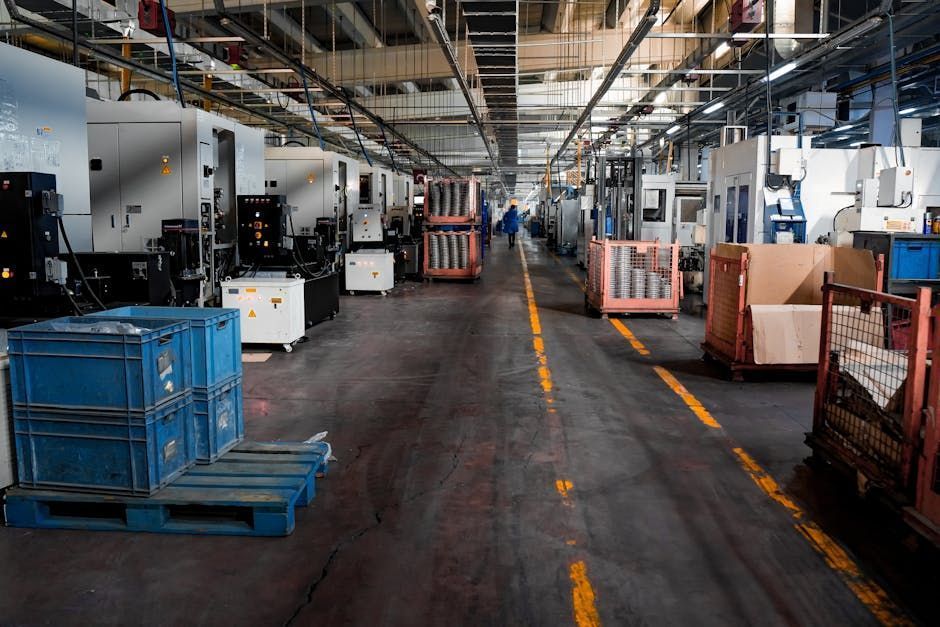
Picture this. It's 10:00 AM on a Tuesday… middle of your production run, nothing special. Then a server hiccups. Or maybe a switch just dies. It could be ransomware. Suddenly, the shop floor goes quiet.
CNC machines stop mid-cycle. Your logistics software won't even load. The shipping department might as well go home.
That's what I call the Frozen Floor. And get this. Industry data shows the average manufacturing company loses 3 to 5 hours per week to this exact scenario.
Do that math real quick: you're looking at 156 to 260 hours per year, where money's just pouring out the door.
Let’s Do The Math Here
When tech fails, you're not just losing "IT time." You're bleeding from multiple wounds at once.
1. Your payroll keeps running
Forty employees at $30/hour, including benefits. That's $1,200 every single hour they're sitting there, doing nothing. And we're not talking about just anybody. Your best machinists. Your logistics people who actually know what they're doing. Quality control specialists. All of them just... waiting.
2. Lost Production Revenue
Say your plant does $5M annually across 2,080 production hours. Every hour is worth $2,400 in output, but honestly? That number doesn't capture the full extent of the damage. Orders you promised for today.. they ship late.
Your whole production schedule collapses backward like dominoes. Those rush orders where you could've charged premium pricing? Delayed. And the capacity you could've sold to new customers just sits there, completely wasted.
3. Then there's the emergency call
Some IT providers charge $150/hour to put out the fire. Four-hour call? There's another $600. Assuming they even pick up quickly, which (let's be honest) they usually don't.
4. But the hidden costs?
Those are what really hurt.
- Late delivery penalties: Many contracts include penalties of 2-5% for missed deadlines. On a $50,000 order, that's $1,000 to $2,500 down the drain.
- Customer confidence erosion: Your biggest client doesn't want to hear about your IT problems. They want reliability. One missed deadline might be forgiven. Three becomes a pattern that sends them to your competitor.
- Overtime recovery costs: To make up lost production, you'll likely pay time-and-a-half or double-time to catch up. That $30/hour employee now costs $45-$60/hour.
- Inventory holding costs: Raw materials sitting idle, finished goods that can't ship—your cash is trapped in inventory instead of flowing through your business.
Bottom line: a single 4-hour outage for a mid-sized manufacturer runs $15,000 to $25,000 easy. Hit peak production or mess up a critical customer order? Yeah, double that.
How We Actually Think About This
Every technology recommendation we make passes through three mandatory filters:
The Stability Lens
Will this reduce unplanned downtime? We found an 8-year-old switch at one client site that was basically a ticking time bomb. The planned upgrade cost $4,500 and required 3 hours of scheduled downtime. Alternative? Wait for it to fail and eat 12 to 18 hours of emergency downtime costing north of $30,000. Easy call. The thing is, we fix 68% of potential issues through automation before they ever become your problem. Most issues get resolved before you even know they existed.
The Security Lens
Does this reduce our attack surface? Ransomware attacks on manufacturers have increased by 300% over the past 2 years. Attackers target manufacturing specifically because they know downtime costs are insane, making companies way more likely to pay ransoms. We treat your environment like the high-value target it actually is.
The Operations Lens
Will this make daily operations more efficient? Had a client manually re-entering production data from
shop floor systems into their ERP. Every. Single. Day. Two hours of tedious, error-prone work. We automated it. Saved 500+ hours annually, cut errors by 94%. That's not IT support, that's fixing how the business actually runs.
What It Costs (The Real Conversation)
Let me be straight with you. For a mid-sized manufacturer with 30-50 employees:
- Budget MSP runs $3,000-$4,500/month.
- Comprehensive partnership runs $5,500-$8,500/month.
- So you're looking at a $2,500-$4,000/month difference.
What does that difference buy? Preventing 3-4 outages per year. Cutting response time from 4 hours to 15 minutes for critical issues. Getting a dedicated team that knows your business, instead of ticket-queue roulette. Regular technology planning that actually aligns with where you're growing. Security that works against modern threats.
Here's the thing: if that proactive approach prevents just ONE 4-hour outage per year, you've saved $15,000 to $25,000 on an additional $30,000 to $48,000 annual investment. The ROI isn't even close.
Is This Right for You?
Makes sense if unplanned downtime costs you $5,000+ per hour. If you've got compliance requirements that demand real security. If your growth plans need technology that actually scales with you, not against you.
The real question isn't whether you can afford a comprehensive IT partnership.
The question is whether you can afford another $10,000 hour on your shop floor.
Ready for a partner instead of just another vendor? Let’s talk.