March 9, 2026
Why Your 15-Year-Old ERP System is a Ticking Time Bomb (And How to Safe-Harbor It)
Author
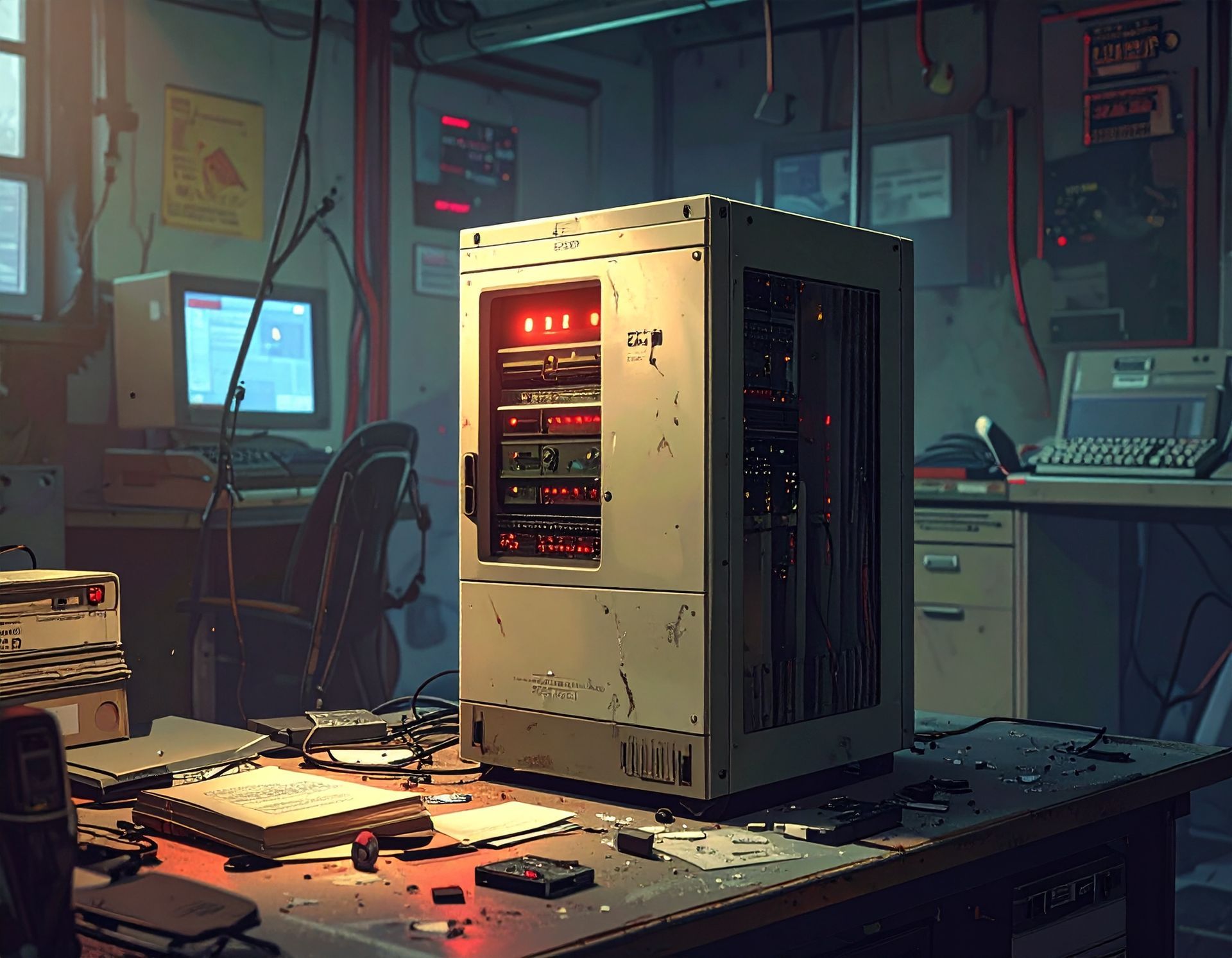
In the manufacturing hubs of East Tennessee (from the busy lines in Alcoa to the specialized shops in Oak Ridge), this silent passenger is riding along in the back office. It's that 15-year-old ERP system, perhaps a legacy version of Microsoft Dynamics AX 2009, an old build of SAP ECC 6.0, Oracle E-Business Suite 11i, or a custom-built database from the early 2000s running on SQL Server 2005 or 2008.
It’s reliable, familiar, and paid for. But in the world of modern cybersecurity and hardware cycles, it is also a ticking time bomb.
At
Hyperion Networks, we don’t believe in "ripping and replacing" perfectly functional tools just because they’re old. However, we do believe in
Safe-Harboring. This is the strategic protection of
legacy systems so they don’t become the single point of failure for your entire operation.
The Reality of the "Vintage" ERP
Running your multi-million dollar production line on 15-year-old software is like driving a vintage Mack truck at 70 mph on I-75. It has the soul and the power to get the job done, but if a single proprietary belt snaps, you won't find a replacement at the local parts store.
The engine runs, the transmission shifts, but the supply chain for critical components vanished a decade ago.
For many Tennessee manufacturers, the "bomb" isn't a lack of features. Your legacy system likely handles inventory, production scheduling, financials, and shipping exactly the way you need it to. The real threat is a compounding frailty in three specific, interconnected domains:
1. The hardware dependency ghost
Legacy software often requires legacy operating systems (like Windows Server 2008 or older). These systems weren't designed for modern, high-speed SSDs or virtual environments. When the physical server does its last tune, finding a motherboard that supports that specific OS version becomes a frantic search on eBay while your plant sits idle.
2. The security silo
Cybersecurity in 2010 was about firewalls and passwords. Today, it’s about Zero Trust and AI-driven threat detection. Your old ERP is a digital "glass house." It cannot be patched against modern ransomware, and once a bad actor gains entry to your network, that legacy system is an open door to your most sensitive financial and proprietary data.
Microsoft also
ended extended support for Windows Server 2008 and 2008 R2 in January 2020. That means no security patches. Ever. Known vulnerabilities (including critical remote code execution exploits) remain permanently unpatched. Modern threat actors have detailed playbooks for exploiting these systems.
3. The "tribal knowledge" cliff
Is your system’s stability dependent on one person? In many Knoxville-area firms, there is one "IT guy" or a long-term office manager who knows the "workarounds." When that person retires or leaves, the manual for your business operations leaves with them. This is what enterprise risk frameworks call a "single point of knowledge failure" or catastrophic "bus factor."
The Solution: The "Safe-Harbor" Strategy
At Hyperion Networks, we use a methodology we call Safe-Harboring. We treat your legacy system like a high-value museum artifact: we keep it functional and operational, but we put it behind bulletproof glass, mount it on earthquake-resistant supports, and install a state-of-the-art security system around it.
Is this a band-aid solution?
No. It's a comprehensive, multi-layer protection architecture that extends your legacy system's operational lifespan by 5-10+ years while delivering enterprise-grade uptime, security, and disaster recovery capabilities.
Step 1: Digital Preservation (Virtualization)
We take your physical, aging server and turn it into a "Virtual Machine." This uncouples the software from the dying hardware. Now, your 15-year-old ERP lives on modern, redundant servers. If one piece of hardware fails, the system automatically migrates to another without a second of downtime.
Step 2: The Network "Air-Gap"
We use
Fortinet security fabric to create a "vault" around your legacy system. We segment it so that the ERP can talk to your printers and workstations, but it cannot "see" or be "seen" by the public internet. This effectively neutralizes 99% of modern cyber threats.
Step 3: Continuity Mapping
We don't just "support" the software; we document it. We bridge the gap between your old processes and modern IT standards, ensuring that your operational history is preserved even if your staff changes.
Why Stability Beats "Cutting Edge"
The "Big Box" IT consultants and enterprise software vendors will tell you that you must migrate to a $500,000-$2.5 million cloud ERP platform today. They'll present glossy PowerPoint decks about "digital transformation," "Industry 4.0," and "AI-powered analytics."
We disagree.
If your current system works for your workflow, supports your production processes, and your team knows how to use it effectively, the most strategically sound and financially prudent decision is to protect and extend what you have.
If your current system works for your workflow, the most "innovative" thing you can do is protect it. By safe-harboring your legacy tech, you avoid the massive cost and cultural shock of a new software rollout while gaining the uptime and security of a modern enterprise.
We speak the language of the shop floor, not just the server room. Whether you’re in Lenoir City or Maryville, our goal is to ensure that your "old reliable" system stays reliable for another decade.
The Hyperion Differentiator: Manufacturing-Fluent Systems Engineering
Unlike generic IT service providers, Hyperion Networks specializes in the intersection of industrial operations and enterprise infrastructure. Our engineers maintain deep familiarity with:
- Manufacturing execution systems (MES) and their integration patterns with ERP platforms
- Industrial protocols (Modbus TCP, OPC UA, EtherNet/IP) and their network security requirements
- Regulatory compliance frameworks applicable to Tennessee manufacturers (ISO 9001, ITAR, CMMC for defense contractors)
- Production-critical uptime requirements where every minute of system downtime translates directly to halted production lines and revenue loss
Whether your operation is in Lenoir City, Maryville, or Clinton, our methodology ensures your legacy ERP infrastructure receives enterprise-grade protection without compromising the workflows that drive your competitive advantage.
Critical indicators that your legacy ERP requires immediate Safe-Harboring:
- Operating system has reached Microsoft/vendor End-of-Life (EOL) status
- System runs on physical hardware manufactured before 2015
- No virtualization or automated backup/recovery capability exists
- Fewer than two personnel possess comprehensive system knowledge
- System has direct internet connectivity or resides on a flat network architecture
- Last security assessment occurred > 24 months ago or never
- Disaster recovery plan untested or non-existent
Is your legacy system protected or just lucky?
Don't wait for the "white screen of death" to find out. Our comprehensive assessment includes infrastructure vulnerability scanning, network topology analysis, backup validation testing, disaster recovery plan review, and knowledge transfer gap identification. We'll deliver a detailed risk matrix and Safe-Harbor implementation roadmap specific to your operational environment and production requirements.
Let's look under the hood of your ERP and build a vault around your operations before luck runs out.